
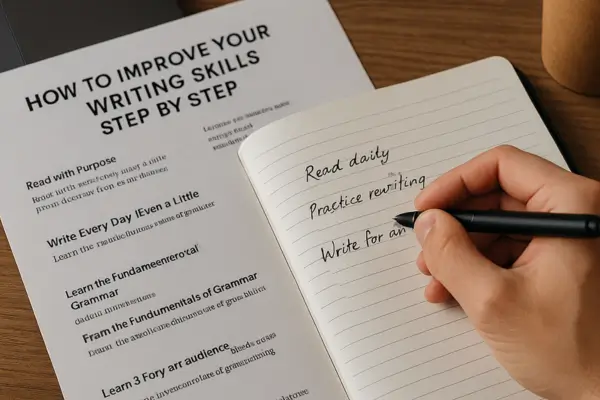
Writing is one of the most powerful tools for communication. Whether you’re crafting emails, blog posts, academic essays, or professional documents, writing well can make a lasting impression. But great writing doesn’t come overnight—it’s built gradually through practice, learning, and refinement. In this article, we’ll explore a practical, step-by-step approach to becoming a better writer, even if you’re just starting out.
Understand Why Writing Matters
Before diving into techniques, it’s important to understand the value of writing. Strong writing skills can:
- Enhance your ability to express ideas clearly
- Open doors in professional fields like marketing, journalism, and freelancing
- Help you think more critically and organize your thoughts
- Improve your confidence in communication
With that in mind, let’s break down the journey into manageable steps.
Step 1: Read with Purpose
The best writers are often avid readers. But it’s not just about reading more—it’s about reading with intention.
- Study structure: Notice how writers introduce topics, build arguments, and conclude.
- Observe tone and voice: Is the writing formal or casual? Does it feel personal or distant?
- Highlight what works: Underline sentences or phrases you find compelling. Ask yourself why they’re effective.
Reading a variety of materials—articles, essays, short stories, blog posts—broadens your understanding of different writing styles.
Step 2: Write Every Day (Even a Little)
Consistency is more powerful than occasional big efforts. Try to write every day, even if it’s just 10 minutes.
Here are simple ways to build a habit:
- Keep a journal and reflect on your day
- Rewrite a favorite paragraph in your own words
- Set micro-goals like writing one solid paragraph per day
The goal is to get comfortable expressing your ideas on paper or screen.
Step 3: Learn the Fundamentals of Grammar
Grammar isn’t about memorizing rules just for the sake of it. It’s the framework that makes your writing clear and readable.
Key areas to focus on:
- Subject-verb agreement
- Proper punctuation
- Consistent tense usage
- Sentence structure
There are many free grammar tools and apps that help catch errors and explain corrections. Over time, you’ll internalize these rules and apply them naturally.
Step 4: Start with Simple Sentences
Complex sentences don’t automatically mean better writing. In fact, clarity often comes from simplicity.
Try this exercise:
Write one idea per sentence. Then gradually expand the sentence with a detail or example.
Simple doesn’t mean boring—it means direct, readable, and easy to follow.
Step 5: Practice Rewriting
First drafts are rarely perfect. Rewriting helps you polish your thoughts and spot areas for improvement.
Tips for effective rewriting:
- Read your writing out loud
- Cut unnecessary words
- Replace vague words with specific ones
- Check for repetition or awkward phrasing
Great writing often comes from solid rewriting.
Step 6: Get Feedback from Others
Feedback is a shortcut to growth. Another set of eyes can reveal things you might miss.
Ask someone to review your writing and answer:
- Was the message clear?
- Did the writing feel engaging?
- Were there any confusing parts?
Be open to constructive criticism—it’s how professionals improve.
Step 7: Focus on One Skill at a Time
Trying to master everything at once can be overwhelming. Instead, isolate a skill each week:
- Week 1: Paragraph structure
- Week 2: Stronger verbs
- Week 3: Sentence variation
- Week 4: Transitions between ideas
Tracking progress in small areas builds long-term confidence and fluency.
Step 8: Use Writing Prompts
Prompts are great tools to inspire creativity and help overcome writer’s block.
Example prompts:
- Describe a moment you felt proud of yourself
- Write about a place that changed you
- Explain how to make your favorite recipe
The key is to focus less on perfection and more on expressing your thoughts freely.
Step 9: Build a Personal Style
Your writing style is your voice on the page. It develops naturally over time, but you can guide it by:
- Reflecting your personality in your tone
- Writing the way you speak (when appropriate)
- Using examples from your life or work
People connect with authentic writing. Don’t be afraid to let your personality shine.
Step 10: Study Great Writing and Analyze It
Pick a blog post or article you admire and break it down:
- How is the introduction crafted?
- What makes the content flow smoothly?
- How are transitions handled?
- How does the conclusion leave an impact?
Reverse-engineering great content teaches you what works and why.
Step 11: Keep a List of Improvements
Every time you learn something new, write it down. Your improvement list might include:
- Words I tend to overuse
- Mistakes I’ve corrected recently
- Favorite phrases and transitions
This list becomes your personal writing toolbox.
Step 12: Write for an Audience
Once you’re comfortable, begin writing with real readers in mind. You can:
- Start a blog
- Write posts on LinkedIn or Medium
- Contribute guest articles
Knowing others will read your writing can motivate you to polish your work and clarify your ideas.
Final Thoughts: Keep Going Even When It Feels Hard
Improving your writing is a lifelong process. Some days it will feel easy, other days it won’t. The important thing is to keep showing up and practicing.
Even small, consistent steps lead to big results. With time, patience, and curiosity, you’ll become not just a better writer—but a better thinker, communicator, and creator.