
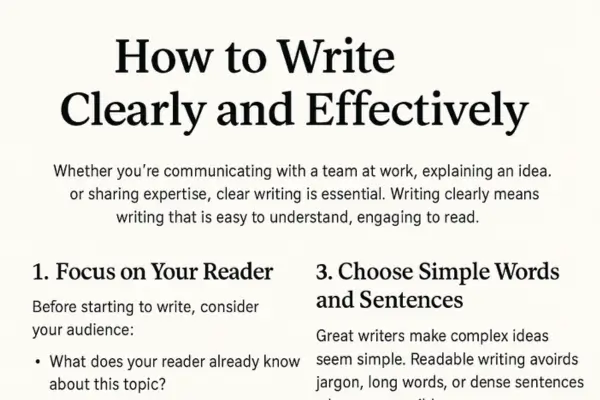
Great writers aren’t born—they’re made through practice, curiosity, and a commitment to growth. While styles and genres may vary, some qualities are consistently found in those who write with impact, clarity, and depth. Whether you dream of being a novelist, a copywriter, a journalist, or a content creator, there are certain traits and habits that elevate good writing to great writing.
Let’s explore what truly makes a writer great—and how you can develop these qualities yourself.
Clarity of Thought
At the heart of great writing is clear thinking. The ability to organize ideas, identify key messages, and express them with precision sets strong writers apart.
Great writers:
- Break down complex ideas into simple, understandable language
- Avoid jargon unless necessary
- Know exactly what they want to say before they start writing
How to develop it: Outline your ideas before writing. Ask yourself, “What’s the one thing I want the reader to remember?”
Curiosity and a Love of Learning
Great writers are curious about the world. They read widely, explore new ideas, and ask questions.
This curiosity:
- Fuels content ideas
- Deepens understanding of diverse topics
- Helps writers connect with different audiences
How to develop it: Read outside your comfort zone—science, history, memoirs, blogs, and essays. Ask “why” and “how” as often as possible.
Empathy and Audience Awareness
The best writers don’t just write for themselves—they write with the reader in mind. They anticipate questions, acknowledge pain points, and adjust tone and style accordingly.
Empathetic writers:
- Understand their audience’s needs
- Use language that resonates
- Avoid assumptions or exclusionary language
How to develop it: Create a reader persona. Ask: “Who will read this? What are they feeling? What do they want from me?”
Strong Editing Skills
Great writing usually begins as average writing—and gets better through revision. Strong writers embrace editing as part of the creative process.
They:
- Cut unnecessary words
- Strengthen verbs and sentence flow
- Fix inconsistencies and awkward phrasing
How to develop it: Edit your drafts at least twice. Read aloud to catch rhythm issues. Use tools like Grammarly, Hemingway, or ProWritingAid.
A Unique Voice
Voice is what makes your writing sound like you. It’s your personality on the page—and great writers develop a voice that feels both authentic and engaging.
Your voice includes:
- Word choice and phrasing
- Rhythm and tone
- Point of view and attitude
How to develop it: Write like you talk. Try journaling or writing letters. Don’t be afraid to sound human—quirks included.
Persistence and Discipline
Great writing takes time—and rewriting. The best writers push through doubt, rejection, and mental blocks to keep improving.
They:
- Write regularly, even when it’s hard
- Treat writing as a craft to be refined
- Seek feedback and use it to grow
How to develop it: Set a writing schedule. Track your progress. Celebrate small wins, like completing a draft or publishing a blog post.
Willingness to Take Risks
Great writers experiment. They play with form, structure, and content. They’re not afraid to challenge norms, be vulnerable, or try something new.
Risk-taking leads to:
- More original ideas
- Unexpected insights
- Stronger creative voice
How to develop it: Write outside your comfort zone—try poetry, satire, or flash fiction. Share your work and invite critique.
Commitment to Clarity and Impact
Great writers want their words to matter. They aim not just to express, but to influence, inspire, or inform. Their writing has intention.
This means:
- Knowing the goal of each piece
- Staying focused and concise
- Ending with purpose
How to develop it: Before writing, define your goal. After writing, ask: “Did I achieve it?”
Final Thoughts: Becoming a Great Writer Is a Journey
There’s no magic formula for greatness, but there are clear patterns. Great writers think clearly, care deeply, and write consistently. They stay open to learning, revise without ego, and write with the reader in mind.
Whether you’re just starting or you’ve been writing for years, these qualities are within reach. Cultivate them one at a time, and over time, you’ll not only become a better writer—you’ll become a more thoughtful communicator and observer of the world.